
Coffee-to-water ratios for 250, 400 and 600 g
A short reference for changing batch size without doing the division at the counter.
Keep one small brew record
A useful note can be only four entries: dry coffee, water added, grind setting and a brief taste observation. Change one entry deliberately on the next brew. This gives the arithmetic a practical role without turning every morning into a spreadsheet. If the finished cup is smaller than expected, record that yield separately from the water input.
Divide the water by the second number
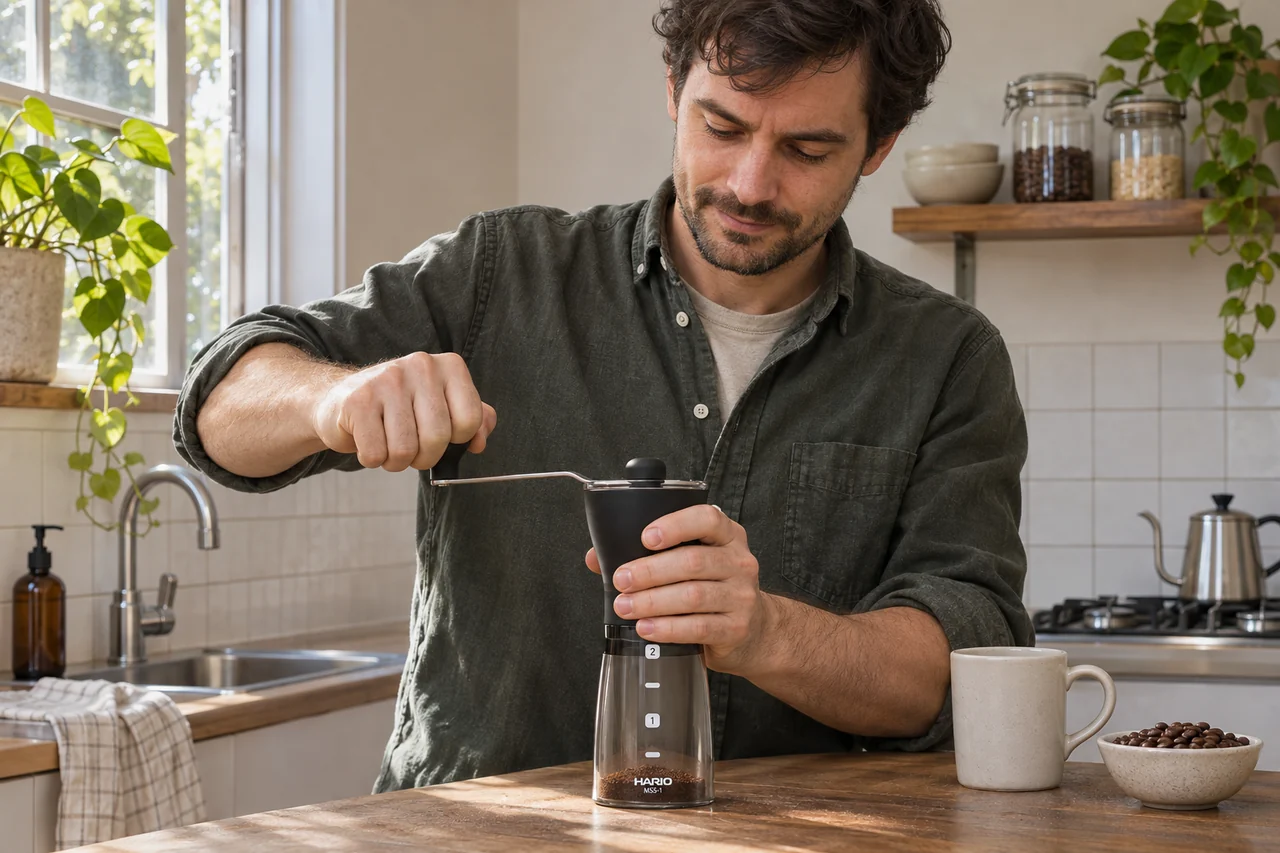
A 1:16 coffee-to-water ratio means one gram of dry coffee for every sixteen grams of brewing water. Divide water mass by sixteen to find the dose; multiply the dose by sixteen to find the water. For 400 g of water, that is 25 g of coffee.
These figures describe what goes into the brew, not how much lands in the cup. Wet grounds retain water, and different methods handle liquid differently. If you want a particular finished serving, measure your normal yield and adjust the input batch from there.
Three batches, four ratios
The figures below are arithmetic rounded to the nearest tenth of a gram. They are useful starting quantities, not a claim that one ratio suits every coffee or brewing method.
- 250 g water: 16.7 g at 1:15; 15.6 g at 1:16; 14.7 g at 1:17; 13.9 g at 1:18.
- 400 g water: 26.7 g at 1:15; 25.0 g at 1:16; 23.5 g at 1:17; 22.2 g at 1:18.
- 600 g water: 40.0 g at 1:15; 37.5 g at 1:16; 35.3 g at 1:17; 33.3 g at 1:18.
Check the equipment before scaling up
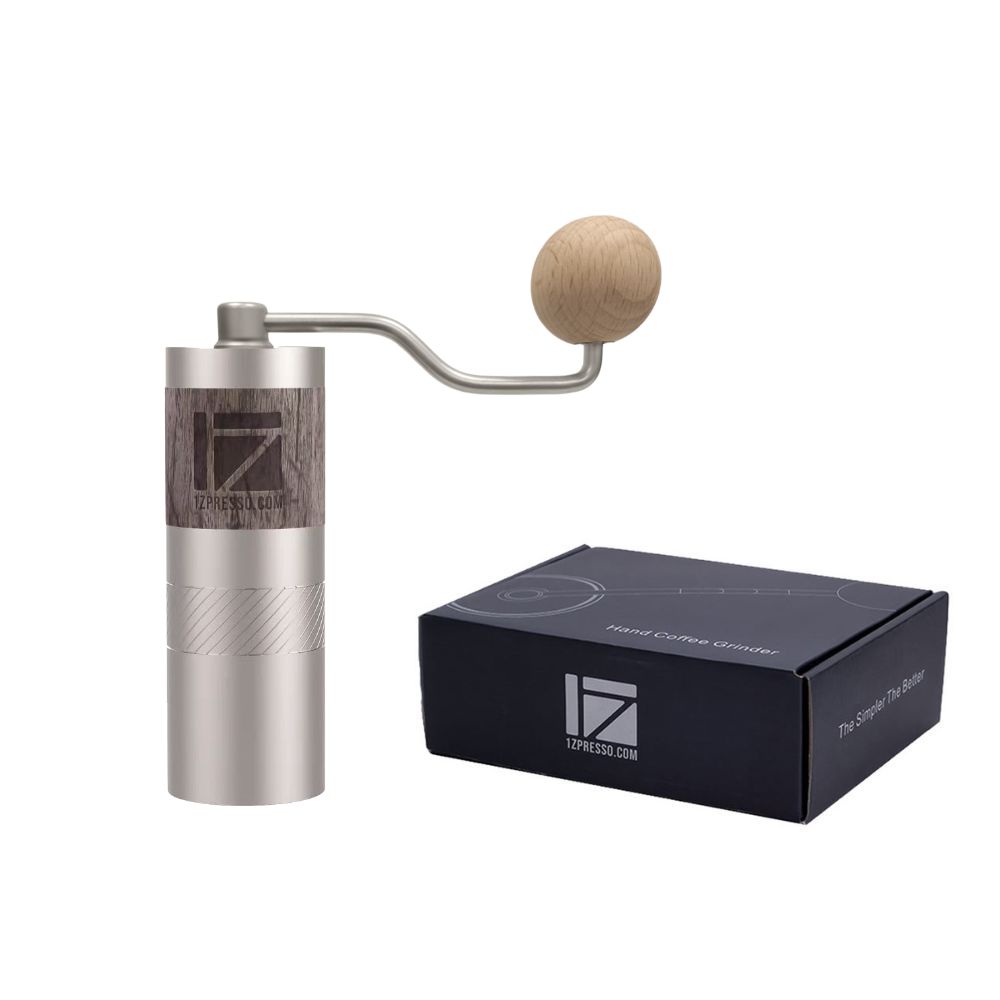
The 1Zpresso Q’s listed 15–20 g grounds capacity is comfortable territory for several of the small-batch figures. The 600 g column asks for more than that, so plan multiple loads or another grinding arrangement. A closed immersion brewer also needs enough physical room for the chosen batch.
Use the ratio calculator from the main navigation for other quantities. When experimenting, change one thing at a time and write down what you did. Keeping the dose and water consistent makes the next cup easier to compare; the numbers alone do not promise a taste result.
Sources
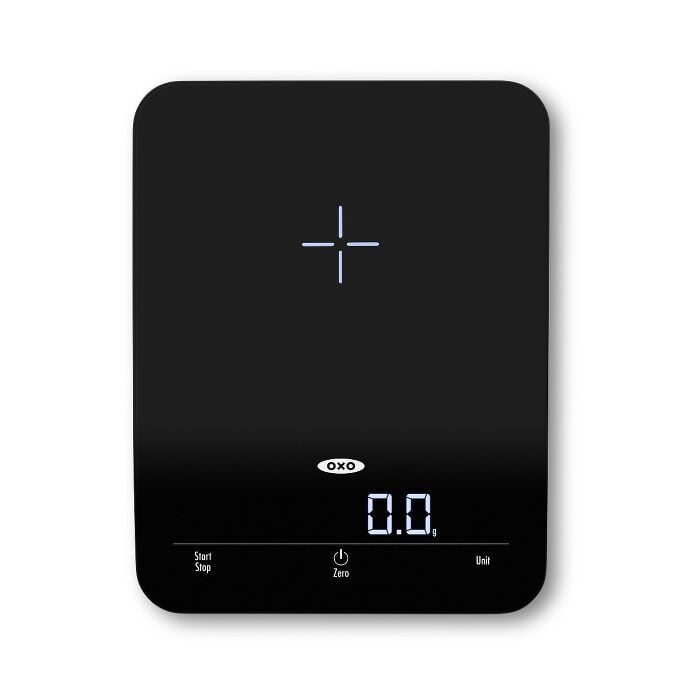
- OXO Precision Scale with Timer — manufacturer listingChecked November 15, 2026
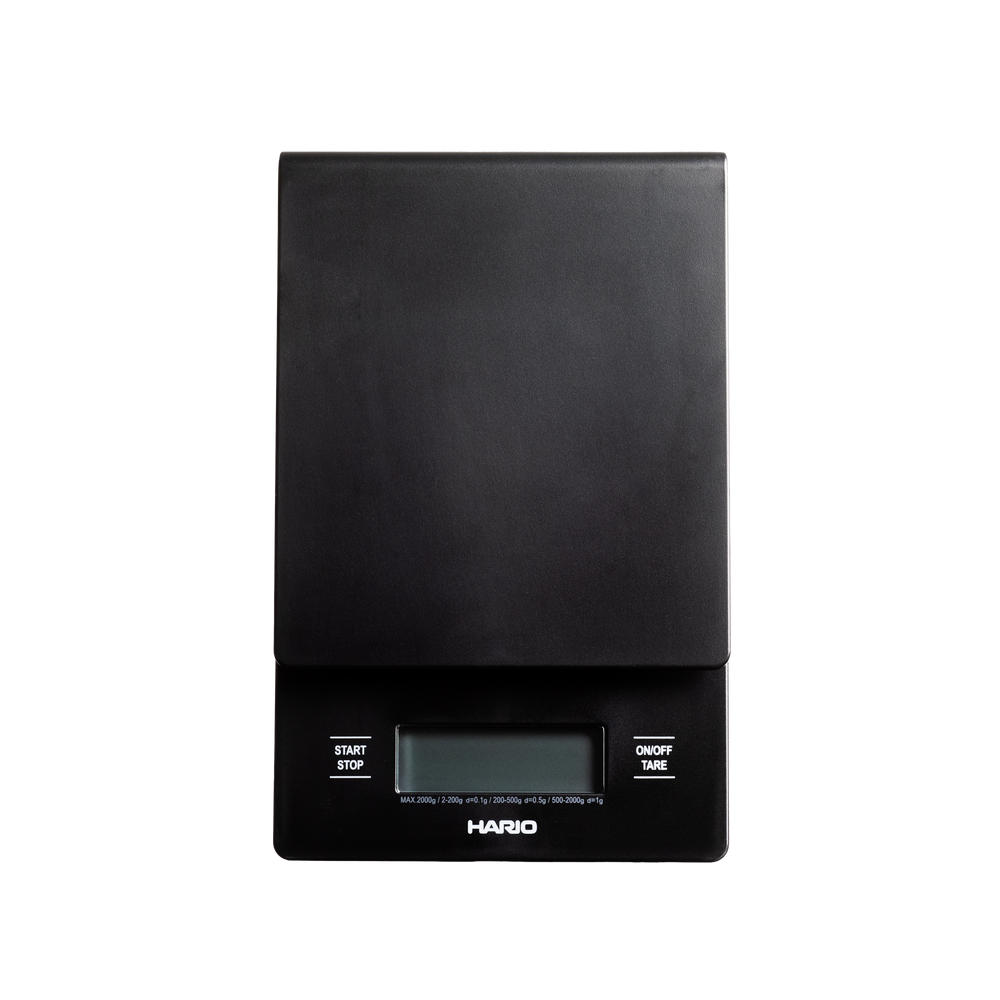
- Hario V60 Drip Scale — manufacturer listingChecked November 15, 2026
- 1Zpresso Q, silver — manufacturer listingChecked November 15, 2026